


Playing sports with glasses is much easier with a pair made for movement: sports glasses sit firmly, stay clear and have shatter-resistant lenses. Here you will find out which sports glasses suit which sport, what to look for and what works for glasses wearers: prescription lenses, contact lenses or swimming goggles.
Key points at a glance
- Everyday glasses do not belong in sport: they slip, steam up and can cause injury in a fall.
- Good sports glasses have shatter-resistant lenses, a curved shape, a secure fit and ventilation. The tint should match your sport and the light.
- If you wear glasses, you can choose sports glasses with prescription lenses or wear contact lenses. For swimming there are prescription swimming goggles.
- Safety comes before looks. Look for UV400 and the CE mark.
Glasses and sports: why everyday glasses are not enough
Everyday glasses are not made for this kind of strain. When you exercise they can slip or steam up, and in a fall they can become a risk of injury. Sports glasses keep wind, water and foreign bodies away, filter UV radiation and reduce distracting glare.
Which sports glasses suit which sport?
There are sports sunglasses, sports glasses for indoors and outdoors, and special models for water and winter sports. For occasional athletes a simple pair is usually enough. The more specialised your sport, the more carefully you should choose.
- Cycling: a large, curved lens, good ventilation and a fit that works under your helmet. Everything about it is in our guide to cycling glasses.
- Running and hiking: light glasses that do not slip, with air reaching the lens.
- Skiing and winter sports: snow is very bright, so lens category and a snug fit matter. More in our guide to ski goggles.
- Surfing and water sports: models made for water sports and a glasses strap so they are not lost.
- Ball and indoor sports: shatter-resistant lenses and a frame without metal parts that stays put. Indoors you do not need a tint.
Best sports glasses: what to look for in lenses, fit and ventilation
- Material: lenses and frame should be shatter-resistant plastic such as polycarbonate. Glass and metal parts are a risk in a fall. Polycarbonate scratches easily, so it needs a hard coating.
- Shape: a curved shape works like a shield against wind, water and foreign bodies. The glasses should wrap around the face without touching your eyelashes.
- Fit: adjustable nose pads and temples, grip nubs and an elastic glasses support band keep sports glasses from slipping. The temples should curve around the ear.
- Ventilation: if glasses steam up when you work out, some distance to the face, vents and an anti-fog coating help. Sweat blockers stop moisture running into your eyes.
- Tint: colour and strength should suit the sport and the light. Interchangeable lenses make a pair flexible.
In our range you will currently find sports sunglasses from Oakley, for example the Radar EV Path with its tall half-rim lens, the Sutro models with a large shield lens and the light Flak 2.0 XL. For everyday wear there are lifestyle models such as Holbrook, HSTN and Frogskins, which shield less from the sides.
 Oakley EYEJACKET REDUX (OO9438 943805)£118.15 POakley RADAR EV PATH (OO9208 920847)£115.67Oakley HOLBROOK (OO9102 9102D6)£125.37 POakley EYEJACKET REDUX (OO9438 943801)£92.23Oakley HSTN (OO9242 924207)£105.61Oakley TERRAFORMA (OO9530 953001)£75.94Oakley TERRAFORMA (OO9530 953006)£120.25 POakley RADAR EV PATH (OO9208 920846)£113.98
Glasses for exercise with a prescription
Doing sports without glasses only works if your vision problem is slight. Otherwise you have these options:
- Sports sunglasses with prescription lenses: many sports sunglasses can be fitted with lenses in your prescription. With strongly curved frames the possible range is limited.
- Clip-in insert: a small frame with your lenses sits behind the sports lens. The field of view is smaller.
- Contact lenses: there is no frame to slip, steam up or sit in your field of view. Sports glasses or sunglasses worn over them still keep off wind, dust and sun.
Whether contact lenses suit you and your sport is something to ask your optician or eye doctor. Basics are in Contact Lenses – See Clearly Without Glasses.
Swimming, snorkelling and water sports with glasses
Diving or surfing are no problem for glasses wearers. Wearing everyday glasses in the pool is not advisable: going under water and jumping from the diving board are out, and in the sea one wave can be enough to lose them.
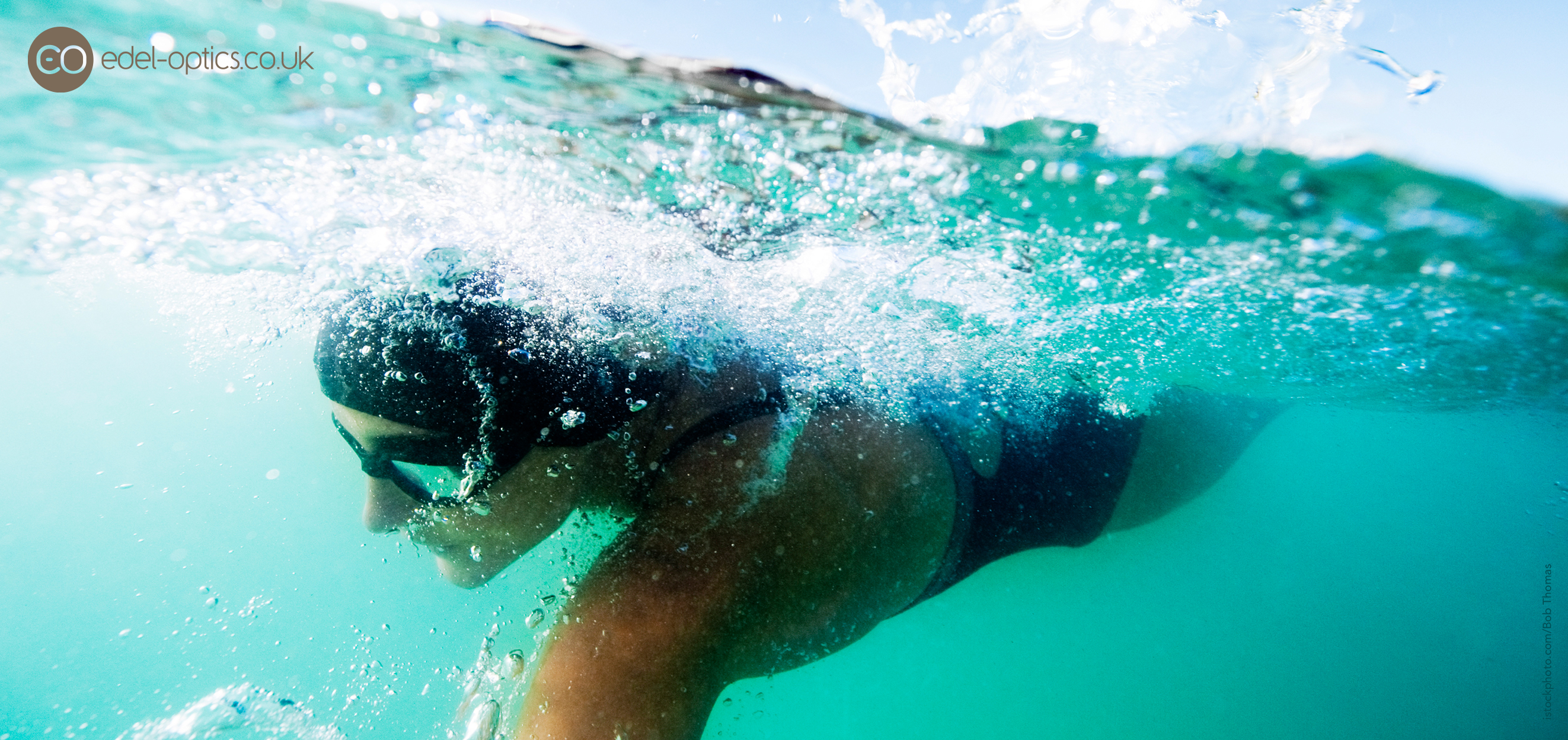
- Swimming goggles with prescription: if you often jump into the water, they combine visual aid and water protection. They are available in sports shops for common prescriptions, and so are diving masks with prescription lenses.
- Snorkelling with glasses: everyday glasses do not go under a mask in the water. Use a diving mask with prescription lenses, or contact lenses under a mask or goggles.
- Contact lenses plus goggles: lenses should not touch water if possible. Hard lenses can be washed out, soft ones can change shape, and bacteria from the water can later cause eye infections. One-day lenses under swimming goggles are best.


