


Kids’ glasses have a tougher life than adult frames: playgrounds, football, school bags and sandpits. This guide explains how to choose glasses for kids, from the signs that a child may need glasses to the right fit, frame materials and children’s lenses. You’ll also find out what you should know before buying kids’ sunglasses in the UK, and how to help your child enjoy wearing their glasses.
Key points at a glance
- Whether your child needs glasses is for an optometrist or eye doctor to decide. Signs such as squinting or holding books very close are a good reason to book an eye test.
- Good children’s glasses sit securely without pinching: the bridge and temples need to fit, and spring hinges make the frame more robust.
- Plastic lenses are the first choice for children, especially impact-resistant materials such as polycarbonate. Kids’ sunglasses should offer UV400 and carry the CE or UKCA mark.
- Under certain conditions, the NHS helps with the cost of glasses for children – ask your optician what applies.
Does my child need glasses? Common signs
Children rarely say that they can’t see well. They don’t know any different and assume everyone sees the way they do. So it’s worth watching out for small signs in everyday life:
- Your child squints or holds books, tablets or the TV very close.
- They often rub their eyes, blink a lot or tilt their head.
- One eye sometimes turns in a different direction or is closed when they look at something.
- They trip over a lot, are unsure when playing ball games or don’t enjoy drawing, puzzles or reading.
- At school, they find it hard to read the board.
These signs don’t prove that your child needs glasses, but they are a good reason to book an eye test. In the UK, NHS sight tests are free for children under 16, so a check-up is easy to arrange. Common reasons for glasses for children are long-sightedness, short-sightedness and astigmatism. The optometrist or eye doctor decides on the prescription and how often your child should wear their glasses. Because children’s eyes change as they grow, regular check-ups are important.
How to choose glasses for kids: fit, bridge and temples
Glasses only help if they are worn – and children only wear them if they’re comfortable. If the glasses pinch or slip, they quickly end up in a coat pocket or buried in the sandpit. When choosing glasses for children, check these points:
Bridge and nose pads
A child’s nose bridge is still flat and soft and offers less support than an adult’s. The bridge of the frame should rest evenly without pressing. Soft silicone nose pads spread the weight and stop the glasses sliding down. Your child’s eyes should be roughly in the centre of the lenses so they don’t look over the top of the frame.
Temples
The temples (arms) should be long enough to rest gently behind the ears and shouldn’t press against the side of the head. For toddlers and wild play, there are curl-sided temples that wrap further round the ear, or a strap that holds the glasses in place. For sport, sports glasses or a sports strap can be a good idea.
Spring hinges
Spring hinges bend a little beyond the normal opening angle and then spring back. This makes glasses more robust when they’re pulled off with one hand or get knocked during play. The frame also gives a little as your child’s head grows.
Children’s glasses sizes at a glance
Children’s eyewear comes in many sizes, from toddlers to teenagers. The measurements are usually printed on the inside of the temple, for example 44□16 125.
| Measurement | Example | What to look for |
|---|---|---|
| Lens width | 44 mm | The eyes sit roughly in the centre of the lens and the frame is no wider than the face. |
| Bridge width | 16 mm | The bridge rests on the nose without pressing or slipping. |
| Temple length | 125 mm | The temple reaches behind the ear and rests there. |
If your child already has glasses that fit well, their measurements are a good starting point. Older children and teenagers can often wear glasses designed for teens or narrow adult frames as well.
Frame materials: what children’s eyewear has to cope with
Glasses for kids should be light, sturdy and a little flexible. The most common materials are:
- Plastic: lightweight, available in lots of colours and often pleasantly flexible. Many children’s frames are made of plastic because it copes well with knocks.
- Metal: slim and light, often with adjustable nose pads that can be fitted to flat children’s noses. Titanflex Kids, for example, offers particularly flexible metal frames.
- Soft extras: Rubberised temple tips and silicone pads give a secure hold and help avoid pressure marks.
Whatever the material, a solid, well-made frame is better than a very delicate one. Tiny screws and thin bridges break more easily on children.
Children’s lenses: plastic instead of glass
Plastic lenses are the first choice for children. They are lighter than glass lenses and much more impact-resistant. Glass lenses can shatter if a child falls off their bike or is hit by a ball, so they aren’t recommended for children.
- Polycarbonate and similar materials are considered particularly impact-resistant and are a good choice for sport and play.
- Hard coating: makes the lenses more resistant to the scratches that happen quickly in a child’s everyday life.
- Anti-reflective coating: reduces distracting reflections, for example from the whiteboard or screens.
- UV filter: A UV filter makes sense in everyday glasses, too. Ask about it when you buy.
What should I know before buying kids’ sunglasses in the UK?
Children spend a lot of time outdoors, and the lens inside their eyes is clearer than an adult’s. Whether you’re looking for toddler sunglasses, junior sunglasses or children’s sunglasses for school-age kids, the most important thing is a full UV filter. The tint tells you nothing about this: light lenses can offer UV400, while dark lenses without a UV filter are unsuitable. You can read more in our article What you need to know about UV radiation.
- UV400: The lenses filter UV radiation up to 400 nanometres.
- CE or UKCA mark: shows that the sunglasses meet UK and European requirements (standard EN ISO 12312-1).
- Filter category: Category 2 or 3 is usually enough for summer days, and category 3 is common for the beach, water and snow. Category 4 is not suitable for road use, including cycling.
- Impact-resistant lenses and a good fit: plastic lenses, a shape that also covers a little at the sides, and temples that stay put during play.
- Polarised lenses (optional): reduce glare from reflections, for example on water or wet roads.
Toddler sunglasses
For toddlers, soft, flexible frames and a strap are useful, because little ones often pull their sunglasses off. A sun hat with a wide brim is a good addition. If your child needs a prescription, sunglasses are also available with prescription lenses.
Best glasses frames for kids: popular brands and models
There is no single best pair of kids’ glasses. The best glasses for kids are the ones that fit well, are sturdy and that your child likes. Our current selection of kids’ optical glasses includes these brands and models, for example:
- Ray-Ban Kids: children’s versions of well-known Ray-Ban shapes, such as RY1531, RY1549 or Junior Elliot.
- Oakley: sporty frames in XS sizes such as Field Day, Shifter XS, Crosslink XS or Frogskins XS RX.
- Titanflex Kids: lightweight, very flexible metal frames.
- Fashion labels: children’s glasses from Guess, Emporio Armani, Tommy Hilfiger, Esprit, Puma, Burberry, Chloé and Versace Kids.
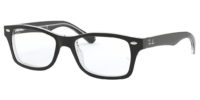
Let your child have a say in colour and shape. You can try on many frames virtually in our online fitting room, which children usually enjoy too.
 Ray-Ban Kids Junior Thalia (RY9095V 3685)£42.89
 Ray-Ban Kids RY1549 3633£62.63
 Ray-Ban Kids RY1598 3541£45.74
 Ray-Ban Kids RY1531 3529£57.26
 Ray-Ban Kids JUNIOR ELLIOT (RY9097V 7514)£44.48
 Guess GU9232 074£47.70
 Chloé CC0020O 002£51.88
 Oakley Shifter Xs (OY8001 800101)£58.27
How can I convince my child to wear glasses?
New glasses feel unusual at first. With patience and a few tricks, they soon become part of everyday life:
- Let them choose: Pick a few frames that fit and let your child choose from them. Children are more likely to wear what they like.
- Talk positively: Point out role models with glasses in the family, among friends or in books and films.
- Build routines: Glasses go on in the morning, just like brushing teeth, and have a fixed place at night.
- Check the fit: If the glasses pinch or slip, your child will take them off. Have an optician adjust them.
- Ask questions: If your child keeps refusing to wear their glasses, talk to the optometrist or eye doctor. Sometimes the prescription no longer fits.
FAQs about glasses for children
Which glasses are safest for children?
Safe children’s glasses fit well and are made of robust materials: a flexible frame, ideally with spring hinges, and plastic lenses such as polycarbonate instead of glass. For sport, there are also sports straps and sports glasses.
How much do glasses for children cost?
That depends mainly on the frame and lenses, including the lens material, the prescription and extras such as an anti-reflective coating. You can see current prices directly on the frames in our shop. Under certain conditions, the NHS helps with the cost of glasses for children through an optical voucher – ask your optician what applies.
Are there glasses for toddlers and babies?
Yes, there are special frames for babies and toddlers made of particularly soft material, often with a strap instead of temples. They are usually fitted by an optician or at the hospital eye clinic.
This article is for general information and does not replace medical advice. If you have questions about your child’s eyes, please speak to an optometrist or eye doctor.


